

The Four Imams of Sunni Islam: A Comprehensive Guide
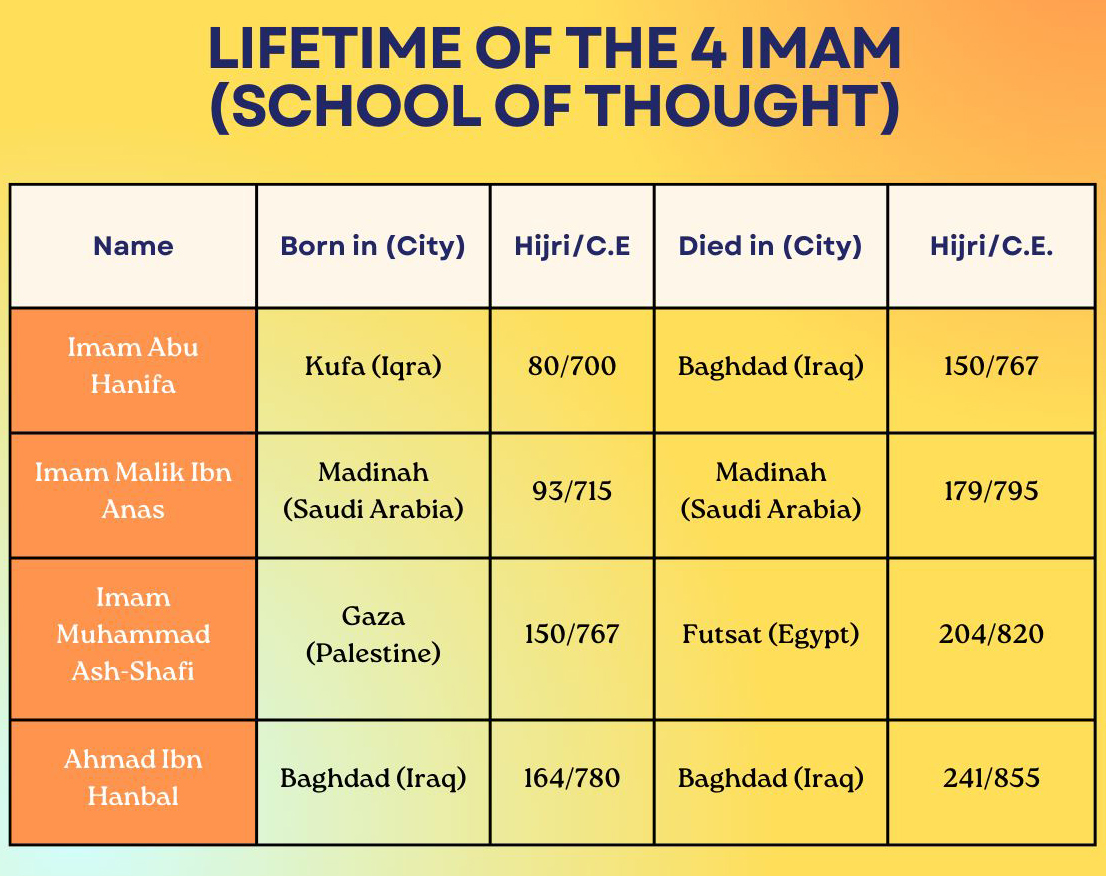 1. Chronological Timeline and Biographies
The four Imams are the founders of the major Sunni schools of jurisprudence (Madhhabs). They are listed below in order of their birth:
| Imam | Full Name | Lifespan (Hijri/AH) | Lifespan (Common Era/CE) |
|---|---|---|---|
| Imam Abu Hanifa | Nu’man ibn Thabit | 80 – 150 AH | 699 – 767 CE |
| Imam Malik | Malik ibn Anas al-Asbahi | 93 – 179 AH | 711 – 795 CE |
| Imam al-Shafi'i | Muhammad ibn Idris al-Shafi'i | 150 – 204 AH | 767 – 820 CE |
| Imam Ahmad | Ahmad ibn Muhammad ibn Hanbal | 164 – 241 AH | 780 – 855 CE |
2. Comparison of the Four Schools (Madhhabs)
As of 2025, these schools represent the primary legal frameworks for Sunni Muslims globally.
| School | Primary Methodology | Key Secondary Sources | Major Geographic Presence |
|---|---|---|---|
| Hanafi | Emphasis on reason and opinion (Ra'y) | Ijtihad (reasoning) & Urf (local custom) | South Asia, Turkey, Balkans, Central Asia |
| Maliki | Textual focus with communal perspective | Amal of Medina (Prophetic tradition in Medina) | North & West Africa, parts of the Gulf |
| Shafi'i | Balance between text and logic | Strong reliance on Hadith and strict Qiyas (analogy) | SE Asia (Indonesia/Malaysia), East Africa, Egypt |
| Hanbali | Strict traditionalism and literalism | Predominantly Quran and Hadith | Saudi Arabia, Qatar |
3. Key Relationships and Historical Context
These scholars did not work in isolation; their methodologies built upon one another through student-teacher relationships:
- Succession: Imam al-Shafi'i was born in the same year that Imam Abu Hanifa passed away (150 AH).
- Direct Mentorship: Imam Malik was a teacher to Imam al-Shafi'i.
- Direct Mentorship: Imam al-Shafi'i was a teacher to Imam Ahmad ibn Hanbal.
- Inter-School Learning: Imam Abu Hanifa’s lead students (like Imam Muhammad al-Shaybani) also taught Imam al-Shafi'i, blending the legal traditions of Iraq and Medina.
4. Summary of Differences
- Legal Rulings: While they agree on the core tenets of Islam, they may differ on specific physical movements during prayer (Salah) or technical requirements for pilgrimage (Hajj).
- Note on Shia Islam: In Shia Islam, the term "Imams" refers to a specific lineage of 12 leaders beginning with Ali ibn Abi Talib, which is a separate historical and theological lineage from these four jurists.


